Accueil
-
Right brachiocephalic vein cannulation in a 3000 gr baby – live case

By Dr. Christian Breschan
Department of Anesthesia, Klinikum Klagenfurt, Klagenfurt, Austria
Active member of the NEVAT -
Ultrasound-guided supraclavicular cannulation of the right brachiocephalic vein in small infants: a consecutive, prospective case series

The team evaluated whether there was an association between the optimum ultrasonographic view as obtained of the entire longitudinal extension of the right BCV and the ease of supraclavicular cannulation when using a strict in-plane technique via a linear US probe in small infants.
Authors: Christian Breschan 1 , Gudrun Graf1 , Robert Jost2 , Haro Stettner3 , Georg Feigl4 , Alja Goessler5 , Stefan Neuwersch1 , Markus Koestenberger1 & Rudolf Likar1
- Department of Anesthesia, Klinikum Klagenfurt, Klagenfurt, Austria
- Department of Anesthesia, Krankenhaus Spittal/Drau, Spittal/Drau, Austria
- Department of Statistics, University of Klagenfurt, Klagenfurt, Austria
- Department of Anatomy, Medical University of Graz, Graz, Austria
- Department of Pediatric Surgery, Klinikum Klagenfurt, Klagenfurt, Austria
Pediatric Anesthesia ISSN 1155-5645
PMID: 26083730 DOI: 10.1111/pan.12700

To read the study Correspondence Dr Christian Breschan, Department of Anesthesia, Klinikum Klagenfurt, Feschnigstrasse 11, 9020 Klagenfurt, Austria
Email: breschan.ch@chello.at
Dr. Christian Breschan is active member of the NEVAT group.
-
Jugular vein cannulation in a 3600 gr baby
How to perform a jugular vein cannulation – live case
By Dr. Christian Breschan
Department of Anesthesia, Klinikum Klagenfurt, Klagenfurt, Austria
Active member of the NEVAT -
Development and Implementation of a Real-time Bundle-adherence Dashboard for Central Line-associated Bloodstream Infections
Central line-associated bloodstream infections (CLABSIs) are the most common hospital-acquired infection in pediatric patients. The average cost is over $55,000 per infection. What is the most successful strategy to reduce that?
Augustine Chemparathy; Martin G. Seneviratne, MD; Andrew Ward, PhD; Simran Mirchandani, MS; Ron Li, MD; Roshni Mathew, MD; Matthew Wood, PhD; Andrew Y. Shin, MD; Lane F. Donnelly, MD; David Scheinker, PhD; Grace M. Lee, MD, MPH
From the Department of Management Science and Engineering, Stanford University, Stanford, Calif.; Department of Biomedical Informatics, Stanford University, Stanford, Calif.; Department of Electrical Engineering, Stanford University School of Engineering, Stanford, Calif.; Center for Biomedical Informatics Research, Stanford University School of Medicine, Stanford, Calif.; and Lucile Packard Children’s Hospital, Stanford University, Stanford, Calif.
*Corresponding author. Address Grace M. Lee, MD, MPH, Lucile Packard Children’s Hospital, Stanford University, 300 Pasteur Dr # H-306A, Stanford, CA 94305-2200PH: (650) 498-6227; Fax: (650) 725-8040 Email: gmlee@stanford.edu David Scheinker and Grace M. Lee are co-senior authors on this work.
Copyright © 2021 the Author(s). Published by Wolters Kluwer Health, Inc. This is an open access article distributed under the Creative Commons Attribution License 4.0 (CCBY), which permits unrestricted use, distribution, and reproduction in any medium, provided the original work is properly cited
To cite: Chemparathy A, Seneviratne MG, Ward A, Mirchandani S, Li R, Mathew R, Wood M, Shin AY, Donnelly LF, Scheinker D, Lee GM. Development and Implementation of a Real-time Bundle-adherence Dashboard for Central Line-associated Bloodstream Infections. Pediatr Qual Saf 021;6:e431.
Received for publication July 18, 2020;
Accepted January 6, 2021.Published online June 23, 2021
DOI: 10.1097/pq9.0000000000000431
-
Modified Seldinger technique for neonatal epicutaneo-cava catheter insertion: A non randomised retrospective study
J Vasc Access 2021 Nov 11

To read the study DOI: 10.1177/11297298211054637
Authors: Jack JC Gibb , Rachael MacLeod, Liam Mahoney and Ziju Elanjikal
Date received: 18 May 2021; accepted: 30 September 2021
In this study, you can find if the success rate is higher when placing an ECC with MST. They also did an economic analysis per successful ECC with MST and SNT.
Keywords: Intensive care, techniques and procedures, nutrition, new devices, economics and health services
-
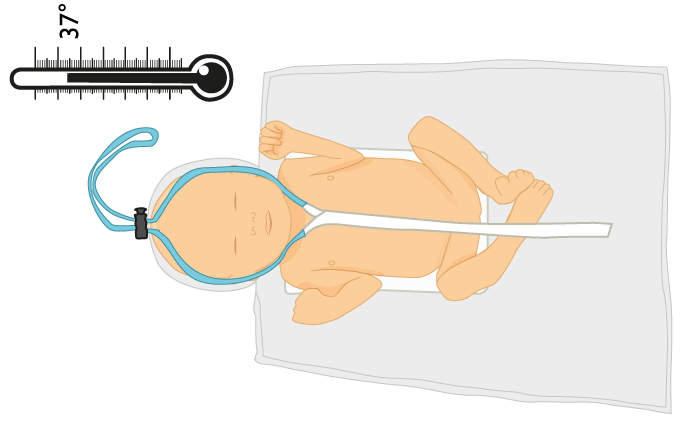
NeoHelp – Neonatal Heat Loss Prevention bag

How to use the NeoHelp – a unique sterile suit prevents hypothermia in newborns.
-
The Intracavitary ECG Method for Positioning the Tip of Central Venous access Devices in Pediatric Patients: Results of an Italian Multicenter Study
Is the IC-ECG method safe and accurate in the pediatric patients? What’s the feasibility and the accuracy if you use a dedicated EGC monitor?
September 2014 – The Journal of Vascular Access

To read the study DOI: 10.5301/jva.5000281
Source – PubMed
Authors: Francesca Rossetti, Mauro Pittiruti, Massimo Lamperti, Ugo Graziano, Davide Celentano, Giuseppe Capozzoli
This group, the Italian Group for Venous Access Devices (GAVeCeLT) has carried out a multicenter study investigating the safety and accuracy of intracavitary electrocardiography (IC-ECG) in pediatric patients.
-
Centrally inserted central catheters in preterm neonates with weight below 1500 g by ultrasound-guided access to the brachio-cephalic vein
What are the conditions to have a 100% success rate?
In this study, published in The Journal of Vascular Access, 1-9, accepted in June 2020, the authors evaluate if ultrasound-guided brachio -cephalic vein catheterization is safe and feasible in preterm babies with a weight below 1500g.
Authors : Giovanni Barone, Mauro Pittiruti, Gina Ancora, Giovanni Vento, Francesca Tota and Vito D’Andrea
Corresponding author: Giovanni Barone, Neonatal Intensive Care Unit, Ospedale Infermi di Rimini, Viale Luigi Settembrini, 2, 47923 Rimini, Italy. Email: gbarone85@yahoo.it

To read the study -
Microsite – Tips for use

Microsite is a Modified Seldinger Technique kit for PICC placement in neonates. This kit aims to minimize venous trauma and increase success insertion rate.
-
How to minimize central line–associated blood stream infections in a neonatal intensive care unit: a quality improvement intervention based on a retrospective analysis and the adoption of an evidence-based bundle
What is the impact of central line bundles for insertion, dressing and maintenance on CLABSI rate and the rate of complications? What are the most important factors and what is necessary?
European Journal of Pediatrics _published online 20 October 2020
Authors : Stéphanie Bierlaire, Olivier Danhaive, Katherine Carkeek and Fiammetta Piersigilli
ISSN 0340-6199
Electronic supplementary material: The online version of this article contains supplementary material, which is available to authorized users.
“The final publication is available at link.springer.com”

To read the study